Imagine a healthcare system where every patient feels seen and heard, and every interaction is personalized to their unique needs. This is the promise of CRM systems in healthcare. By leveraging healthcare customer relationship management technology, providers can deliver more effective care, streamline operations, and enhance patient satisfaction.
Healthcare providers are turning to CRM systems to improve patient engagement and optimize operations. With the help of crm for healthcare industry, organizations can better manage patient relationships, reduce costs, and improve overall efficiency.
Key Takeaways
- CRM systems enhance patient engagement and satisfaction.
- Healthcare providers can streamline operations using CRM technology.
- Personalized care improves patient outcomes and loyalty.
- CRM systems help reduce costs and improve efficiency.
- Effective patient relationship management is key to success.
Understanding CRM Systems in Healthcare
Understanding CRM systems is crucial for healthcare providers aiming to improve patient engagement. CRM systems in healthcare are tailored to manage patient information, interactions, and care plans effectively.
These systems help healthcare providers deliver personalized care by storing and analyzing patient data. For a deeper dive into what constitutes a healthcare CRM, visit this resource for more information.
What is a CRM System?
A CRM system, or Customer Relationship Management system, in the context of healthcare, is designed to manage patient relationships, streamline communication, and enhance patient care. It’s not just about managing patient data; it’s about using that data to provide personalized care and improve patient outcomes.
Key Features of Healthcare CRMs
Healthcare CRMs come equipped with a variety of features designed to enhance patient care and operational efficiency. Some of the key features include:
- Patient management: storing patient information and history
- Communication tools: facilitating effective communication between patients and healthcare providers
- Data analytics: analyzing patient data to inform care decisions
Let’s take a closer look at how these features can be implemented in a healthcare setting:
| Feature | Description | Benefit |
|---|---|---|
| Patient Management | Storing patient information and medical history | Improved patient care through informed decisions |
| Communication Tools | Facilitating communication between patients and providers | Enhanced patient engagement and satisfaction |
| Data Analytics | Analyzing patient data to inform care plans | Better health outcomes through data-driven decisions |
By leveraging these features, healthcare providers can significantly improve the quality of care they deliver. For instance, a HIPAA compliant CRM ensures that patient data is managed securely, adhering to regulatory standards.
As healthcare continues to evolve, the integration of CRM systems is becoming increasingly important. By adopting medical CRM solutions, healthcare providers can stay ahead of the curve, delivering high-quality, patient-centered care.
Benefits of CRM Implementation in Healthcare
CRM implementation is transforming healthcare by enhancing patient engagement and data management. By leveraging CRM software for healthcare providers, organizations can streamline their operations and improve patient outcomes.
The benefits of CRM in healthcare are multifaceted. One of the primary advantages is improved patient interaction. CRM systems enable healthcare providers to personalize their communication with patients, leading to increased patient satisfaction and loyalty.
Improved Patient Interaction
Effective patient interaction is crucial for building trust and ensuring that patients adhere to treatment plans. CRM systems facilitate this by allowing healthcare providers to track patient interactions and preferences, enabling personalized communication strategies. This personalized approach helps in addressing patient needs more effectively, thereby enhancing the overall patient experience.
Enhanced Data Management
Another significant benefit of CRM implementation in healthcare is enhanced data management. CRM systems provide a centralized platform for managing patient data, making it easier for healthcare providers to access and analyze patient information. This leads to better-informed decision-making and more effective patient care.
By adopting CRM technology, healthcare providers can significantly improve their patient relationship management in healthcare. This not only enhances patient satisfaction but also contributes to the overall efficiency of healthcare services.
Streamlining Patient Engagement
Healthcare CRM software is revolutionizing patient engagement by enabling personalized communication and streamlined appointment management. By adopting CRM for the healthcare industry, providers can significantly enhance patient interaction and overall satisfaction.
Personalized Communication Strategies
Personalized communication is key to effective patient engagement. CRM systems allow healthcare providers to tailor their communication strategies to individual patient needs, preferences, and histories. This can include targeted messaging, personalized emails, and customized content that resonates with patients.
Benefits of Personalized Communication:
- Improved patient satisfaction
- Increased patient loyalty
- Better health outcomes through timely interventions
According to a study, personalized communication can lead to a significant increase in patient engagement and satisfaction.
“Personalization is not just a trend; it’s a necessity in today’s healthcare landscape. By leveraging CRM, healthcare providers can deliver care that is tailored to the individual needs of each patient.”
Automated Appointment Reminders
Automated appointment reminders are another crucial feature of healthcare CRM software. These reminders help reduce no-shows, improve scheduling efficiency, and enhance the overall patient experience. By automating routine communications, healthcare staff can focus on more critical tasks.
| Feature | Benefit |
|---|---|
| Automated Reminders | Reduces no-shows, improves scheduling |
| Personalized Messaging | Enhances patient engagement, satisfaction |
By integrating automated appointment reminders and personalized communication strategies, healthcare organizations can significantly improve patient engagement. This not only leads to better health outcomes but also fosters a more positive and loyal patient base.
Optimizing Resource Management
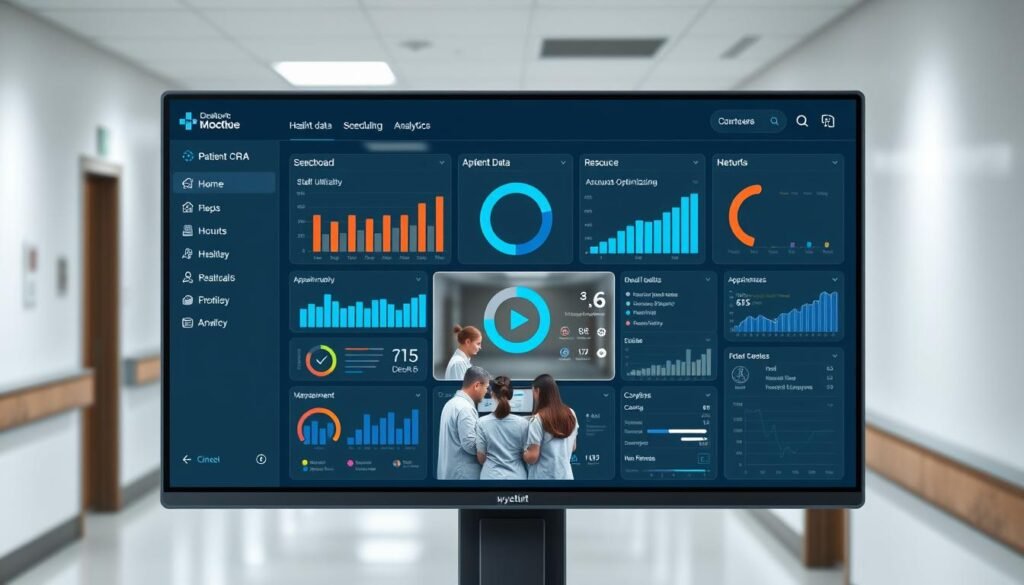
Healthcare organizations are increasingly adopting CRM systems to optimize their resource management. By leveraging healthcare CRM integration, providers can streamline their operations, reduce costs, and improve patient satisfaction. Effective resource management is critical in ensuring that healthcare services are delivered efficiently.
Efficient Scheduling of Healthcare Providers
Efficient scheduling is a key aspect of resource management in healthcare. Medical CRM solutions enable healthcare providers to manage their schedules more effectively, reducing wait times and improving staff productivity. By automating scheduling processes, healthcare organizations can minimize no-shows and optimize their resources.
Managing Staff Workloads
Managing staff workloads is another crucial aspect of resource management. CRM systems help healthcare organizations to distribute tasks more evenly among staff members, reducing burnout and improving job satisfaction. By analyzing staff performance data, healthcare providers can make informed decisions about staffing levels and resource allocation.
By optimizing resource management through healthcare CRM integration, healthcare organizations can achieve significant improvements in operational efficiency and patient care. This, in turn, can lead to increased patient satisfaction and loyalty, ultimately driving the long-term success of the organization.
Driving Patient Retention
CRM systems are revolutionizing patient retention in healthcare by enabling providers to build strong, lasting relationships with their patients. By leveraging CRM technology, healthcare organizations can deliver personalized care, improve patient engagement, and foster loyalty.
Tracking Patient Satisfaction
One of the key ways CRM systems drive patient retention is by tracking patient satisfaction. Healthcare providers can use CRM software to collect feedback through surveys, reviews, and other channels, gaining valuable insights into patient needs and preferences.
For instance, a healthcare organization might use CRM data to identify areas where patients are expressing dissatisfaction, such as long wait times or poor communication. By addressing these issues, providers can improve the overall patient experience and increase satisfaction.
“The goal of patient retention is not just to keep patients coming back, but to build a loyal community that advocates for your healthcare organization.”
Building Long-term Relationships
CRM systems also enable healthcare providers to build long-term relationships with their patients. By maintaining a centralized database of patient information, providers can track patient interactions, preferences, and medical history, allowing for more personalized and effective care.
| CRM Feature | Benefit for Patient Retention |
|---|---|
| Personalized Communication | Improves patient engagement and loyalty |
| Automated Appointment Reminders | Reduces no-show rates and enhances patient satisfaction |
| Patient Feedback Mechanisms | Helps identify areas for improvement |
By utilizing CRM software, healthcare providers can not only improve patient retention but also create a more patient-centric approach to care. As shown in the table above, various CRM features contribute to enhanced patient satisfaction and loyalty.
In conclusion, CRM systems play a vital role in driving patient retention by enabling healthcare providers to track patient satisfaction and build long-term relationships. By adopting CRM technology, healthcare organizations can improve patient engagement, foster loyalty, and ultimately drive business success.
Enhancing Care Coordination
By adopting healthcare CRM software, providers can significantly enhance care coordination, leading to better patient outcomes. Care coordination is a critical component of healthcare delivery, involving the organization of patient care activities and information across different healthcare providers.
Facilitating Team Collaboration
Effective team collaboration is at the heart of enhanced care coordination. Healthcare CRM systems facilitate this by providing a centralized platform where healthcare professionals can share patient information, communicate, and coordinate care plans more efficiently.
For instance, a multidisciplinary team can use a CRM system to:
- Share patient records and treatment plans
- Coordinate appointments and follow-ups
- Communicate patient updates in real-time
Centralized Patient Information
A key feature of healthcare CRM software is its ability to centralize patient information, making it easily accessible to authorized healthcare providers. This centralized database ensures that all relevant patient data is up-to-date and readily available, reducing the likelihood of miscommunication or data loss.
The benefits of centralized patient information include:
| Benefit | Description |
|---|---|
| Improved Data Accuracy | Reducing errors by having a single, updated source of patient information. |
| Enhanced Patient Care | Allowing healthcare providers to make informed decisions based on comprehensive patient data. |
| Increased Efficiency | Streamlining care coordination by minimizing the need to search across multiple systems. |
By leveraging HIPAA compliant CRM systems, healthcare organizations can ensure that patient data is not only centralized but also secure and compliant with regulatory requirements.
Utilizing Data Analytics in Healthcare
With the help of CRM systems, healthcare organizations can now tap into the potential of data analytics to improve patient care. By leveraging crm for healthcare industry solutions, providers can gain a deeper understanding of patient needs and preferences.
Gaining Insights from Patient Data
Data analytics enables healthcare providers to extract valuable insights from patient data. This information can be used to identify trends, predict patient outcomes, and personalize treatment plans. Some key benefits of gaining insights from patient data include:
- Improved patient engagement through targeted communication
- Enhanced patient satisfaction by tailoring services to meet their needs
- More effective resource allocation by identifying areas of high demand
Making Informed Decisions
By analyzing patient data, healthcare providers can make informed decisions that drive better patient outcomes. Medical CRM solutions facilitate this process by providing a centralized platform for data analysis. This enables healthcare organizations to:
- Develop data-driven strategies for patient engagement and retention
- Optimize resource allocation and streamline operations
- Enhance care coordination by sharing insights across teams
In conclusion, the integration of data analytics in healthcare through CRM systems is revolutionizing the way healthcare providers operate. By gaining insights from patient data and making informed decisions, healthcare organizations can improve patient care, reduce costs, and enhance overall operational efficiency.
Compliance and Security in Healthcare CRM
Compliance and security are foundational elements for successful healthcare CRM implementation. As healthcare providers increasingly adopt CRM systems to manage patient interactions, they must ensure these systems comply with stringent regulatory requirements and protect sensitive patient data.
Ensuring HIPAA Compliance
To maintain patient trust and avoid legal repercussions, healthcare CRM systems must adhere to the Health Insurance Portability and Accountability Act (HIPAA). This involves implementing robust security measures to safeguard protected health information (PHI). Key steps include:
- Data Encryption: Encrypting data both in transit and at rest to prevent unauthorized access.
- Access Controls: Implementing strict access controls to ensure that only authorized personnel can view or modify PHI.
- Audit Trails: Maintaining detailed logs of all access and modifications to PHI.
For more information on how healthcare CRM systems ensure patient privacy, visit Sequence Health’s blog.
Data Protection Measures
Beyond HIPAA compliance, healthcare CRM systems must implement comprehensive data protection measures. This includes:
- Regular Security Audits: Conducting periodic security assessments to identify and mitigate potential vulnerabilities.
- Employee Training: Educating staff on security best practices and the importance of protecting patient data.
- Incident Response Plans: Developing and regularly updating plans to respond to data breaches or other security incidents.
By prioritizing compliance and security, healthcare providers can confidently leverage CRM technology to enhance patient engagement while protecting sensitive information. This not only helps in maintaining patient trust but also in reducing the risk of data breaches.
Integrating CRM with Existing Systems
To maximize the benefits of CRM technology, healthcare organizations must integrate it seamlessly with their current systems. This integration is crucial for ensuring that CRM solutions enhance operational efficiency without disrupting existing workflows.
Navigating System Compatibility
One of the primary challenges in CRM integration is navigating system compatibility. Healthcare organizations often have complex IT infrastructures with multiple systems, including Electronic Health Records (EHRs), billing systems, and patient engagement platforms. Ensuring that the CRM system can communicate effectively with these existing systems is vital.
- Assess Compatibility: Conduct thorough assessments to determine the compatibility of the CRM system with existing infrastructure.
- API Integration: Utilize APIs to facilitate communication between the CRM and other systems, enabling smooth data exchange.
- Custom Integration Solutions: Develop custom integration solutions when necessary to address specific compatibility issues.
Transition Strategies for Smooth Integration
A well-planned transition strategy is essential for the successful integration of CRM systems. This involves not only technical considerations but also change management to ensure that staff are adequately trained and supported throughout the process.
- Develop a Comprehensive Integration Plan: Outline the steps required for integration, including timelines and resource allocation.
- Training and Support: Provide comprehensive training to staff on the new CRM system and its integration with existing systems.
- Monitor and Adjust: Continuously monitor the integration process and make adjustments as necessary to address any issues that arise.
For more detailed guidance on implementing CRM in healthcare, you can refer to resources such as Salesforce’s Healthcare CRM Guide, which provides insights into best practices and strategies for successful CRM adoption.
Case Studies: Successful CRM Implementations
The implementation of CRM software has revolutionized patient relationship management in healthcare, enabling providers to deliver more personalized and effective care. By examining successful case studies, healthcare organizations can gain valuable insights into the benefits and best practices of CRM implementation.
Notable Health Systems Using CRM
Several prominent health systems have adopted CRM solutions to enhance their patient engagement and operational efficiency. For instance, a leading healthcare provider in the United States implemented a CRM system to streamline patient communication, resulting in a significant increase in patient satisfaction.
Another notable example is a health system that utilized CRM software to improve its appointment scheduling process. By automating reminders and follow-ups, they were able to reduce no-show rates by 30%. This not only improved patient care but also optimized resource allocation within the organization.
Measurable Outcomes
The impact of CRM implementations can be seen in various measurable outcomes across healthcare organizations. Some of the key benefits include:
| Outcome | Description | Average Improvement |
|---|---|---|
| Patient Satisfaction | Enhanced patient engagement and personalized care | 25% |
| No-Show Rates | Automated reminders and follow-ups | 30% |
| Operational Efficiency | Streamlined processes and resource allocation | 20% |
For more information on successful CRM implementations in healthcare, you can explore our detailed case studies on CRM software for healthcare providers. These real-world examples demonstrate the potential of CRM systems to transform patient care and operational efficiency.
Current Trends in Healthcare CRM
The healthcare CRM landscape is undergoing a significant shift, with emerging trends that promise to improve patient engagement and outcomes. As we explore these trends, it becomes clear that the future of healthcare CRM is not just about managing patient relationships but also about leveraging technology to deliver personalized, efficient, and high-quality care.
Mobile CRM Applications
One of the most notable trends in healthcare CRM is the adoption of mobile CRM applications. These apps enable healthcare providers to access patient data, communicate with patients, and manage appointments on-the-go, enhancing the flexibility and responsiveness of care.
Key benefits of mobile CRM applications include:
- Increased accessibility to patient information
- Improved communication through mobile messaging
- Enhanced patient engagement through personalized mobile experiences
As noted by a healthcare IT expert, “Mobile CRM applications are revolutionizing the way healthcare providers interact with patients, making care more accessible and personalized.”
“The use of mobile CRM in healthcare is a game-changer, enabling providers to be more responsive and proactive in patient care.”
AI and Machine Learning Integration
Another significant trend is the integration of Artificial Intelligence (AI) and Machine Learning (ML) into healthcare CRM systems. AI and ML can analyze vast amounts of patient data to identify patterns, predict patient needs, and automate routine tasks, thereby enhancing the efficiency and effectiveness of care.
| Feature | Benefit |
|---|---|
| Predictive Analytics | Identifies high-risk patients and predicts patient needs |
| Automated Tasks | Streamlines workflows, reducing administrative burdens |
| Personalized Care | Tailors care plans to individual patient needs and preferences |
By embracing these trends, healthcare providers can not only improve patient satisfaction and outcomes but also stay competitive in a rapidly evolving healthcare landscape. As the healthcare industry continues to adopt and integrate these technologies, the potential for medical crm solutions to transform care delivery is vast.
Future of CRM in the Healthcare Landscape
The healthcare industry is on the cusp of a revolution, driven by technological advancements and a growing need for personalized patient care. As we’ve explored, CRM systems are playing a vital role in this transformation, enabling healthcare providers to deliver more effective care and improve patient outcomes.
Innovations Shaping Healthcare CRM
Emerging technologies like AI, machine learning, and mobile applications are set to further enhance the capabilities of CRM for healthcare industry. These innovations will allow for more sophisticated data analysis, enabling healthcare providers to make informed decisions and tailor their services to meet individual patient needs.
Growth Predictions for Healthcare CRM
As the demand for personalized care continues to grow, healthcare customer relationship management systems will become increasingly integral to the industry. With the adoption of emerging technologies, CRM systems will drive improved patient engagement, streamlined operations, and enhanced care coordination, ultimately leading to better healthcare outcomes.
Leave a Reply